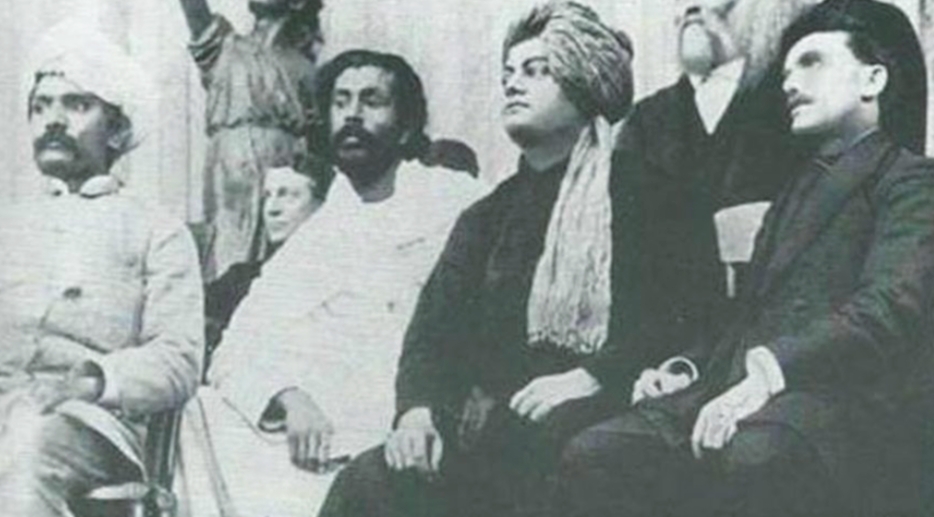
As India aims to be a major player in a world that’s getting more unpredictable, while also dealing with challenges like communalism, social and economic disparities, and ethnic conflicts, Vivekananda’s teachings give us a way to rethink the core issues of national unity, tolerance, and universal humanism.
Swami Vivekananda’s famous speech at the World Parliament of Religions in Chicago on September 11, 1893, serves as a moment to consider how relevant his ideas still are for reimagining India’s role in a world filled with conflict.
Vivekananda’s speech in Chicago wasn’t merely a spiritual plea for tolerance and respect among each other.
It also significantly influenced national imagination, politics, education, and international relations.
Vivekananda’s Speech In Chicago
“Sisters and Brothers of America,” Vivekananda, during his initial address at the World Parliament of Religions, expressed his conviction in a universal religion and recognized all religions as valid.
Tolerance and universal acceptance were key themes throughout his speeches.
He claimed that Hinduism, known as the ‘mother of religions’, has imparted the value of tolerance to the world and emphasized India’s rich history of offering refuge to those fleeing persecution, regardless of their faith or nationality.
Vivekananda cautioned that sectarianism, bigotry, and fanaticism could spread violence and despair across the globe, hindering the advancement of civilizations.
He maintained that holiness, purity, and charity are not the sole domain of any one church.
To support his beliefs in the unity of religions, Vivekananda quoted passages from the Gita that highlight the spiritual inclusiveness and universality of the divine.
Vivekananda was celebrated as the great advocate for India’s spiritual revival after his landmark speech in Chicago.
Followed by three years of lectures and teachings overseas.
His appeal for spiritual unity significantly propelled the concept of spiritual nationalism during the early stages of India’s national movement.
In another speech at the World Parliament of Religions on September 19, 1893, Vivekananda remarked, “unity in variety is the plan of nature, and the Hindu has recognised it”.
He firmly asserted that persecution and intolerance should not exist in governance.
Vivekananda inspired the people with a sense of national pride in India’s rich heritage while promoting a vision of spiritual unity.
His writings focused on awakening the nation and fostering Hindu self identity without compromising the unity that goes beyond borders.
He placed greater importance on serving the underprivileged rather than merely preaching religion, and he saw the youth – blessed with physical strength and moral integrity – as the leaders of the nation’s revival.
Vivekananda declared that all divisions are mere illusions and do not hold true.
He taught that the fundamental unity of humanity is the core of the highest spiritual Truth he had experienced.
He suggested that spiritual unity could be the answer to the material struggles faced by the colonised.
Vivekananda believed in the intrinsic unity of all human beings and aimed to awaken their latent spirit.
He placed selfless service above any social divisions that often spark conflicts.
He consistently reminded people that brotherhood should be the cornerstone of human relationships in the nation.
He believed that the lower castes, the poor, the illiterate, the ignorant, as well as cobblers and sweepers, are all united by the spirit of brotherhood in India.
Vivekananda also highlighted the importance of the physical well being of the marginalized. Because of this, he is celebrated as both a builder of the modern Indian nation and a champion of national unity.
Vivekananda’s impactful messages allow India to make a notable mark in global discussions.
His teachings at the World Parliament of Religions could also form a key part of India’s foreign policy foundations.
Vivekananda’s messages and teachings hold lasting significance for human advancement, global conversations, and the quest for world peace.
- Facebook Launches AI-Powered Studio App, New Creator Dashboard

- Makeup Mistakes Secretly Aging Your Skin

- Emergency Car Checklist: Items You Should Always Carry

- What Is Graveyard Dating? Gen Z’s New Relationship Habit

- Urine Formation: The Hidden Process Nobody Explains

- Walking 3-4 Miles Daily As You Age: Helping or Hurting Your Knees And Hips

- Group Voice And Video Calls Coming Soon To WhatsApp

- How To Stay Young: Habits That Actually Work

- Google AI Mode Unveils Search Agents That Track The Web In Real Time

- Why Tamil Nadu’s Kirti Chakra Hero Became a National Inspiration?

- Tejas Shirse Sets New 110m Hurdles National Record

- The Beauty Of Change: Eighteen Lessons From Life

- 3 Days To A Morning Person: Fact or Fantasy?

- New Zealand Legend Kane Williamson Announces Retirement

- FIFA World Cup 2026: How Fans Can Watch Matches For Free

- YouTube Relaunches Private Chats With Age Verification

- The Future Of Air Travel: Why The 100ml Liquid Limit May Soon Disappear

- Rising Temperatures, Rising Tempers? The Surprising Link Between Heat And Aggression

- India’s Lost Dragonfly Returns After 110 Years

- Snapchat Introduces Safer Story Sharing For Under-16 Users

- Google Launches Gemini 3.5 Live Translate

- The New Dating Trend Everyone’s Talking About: Puffer-Fishing

- Tea, Coffee, Juice: The Worst Empty Stomach Mistakes

- Instagram Introduces Profile Grid Customization

- Skywatchers Alert: Jupiter And Venus Set For A Rare Close Encounter Tonight

- Chrome Just Downloaded a 4GB AI Model? Here’s How to Delete It

- Why Does Real Love Feel Different Than We Expect?

- The 30-Minute Parenting Secret Every Child Needs

- Remote Robotics: Control Robotic Arms From Your Smartphone

- Mumbai’s Pod Taxis: Will BKC Benefit?

- Beyond The Missing Period: Understanding MRKH Syndrome

- Why Calling Every Stomach Problem ‘Gas’ Can Be Risky?

- Poke: Apple’s First AI Agent Debuts

- AC Drying Out Your Skin? Try This Simple Fix

- Want More Fireflies? Transform Your Garden Today

- Spotify Launches Podcast Clips For Instant Highlight Saving

- The Hidden Reason Summer Causes More Headaches

- Early Iron Deficiency Symptoms You Shouldn’t Ignore

- Meta Introduces Premium ‘Plus’ Tier For Instagram, Facebook And WhatsApp

- WhatsApp Launches Channel Status For 24-Hour Admin Updates

- 5 Powerful Signs You’re With The Right Person

- Social Media: The New Smoking For Children?

- Dewy, Glossy, Sweaty: The Viral Makeup Trend Everyone’s Trying

- Luna Launches Smart AI Band For Real-Time Daily Planning

- Meta Launches New ‘Forum’ App

- Why Is Your C-Section Scar Vertical?

- Red vs Orange Heat Alerts: Which One Puts Your Body At Greater Risk?

- Does AC Sleep Weaken Your Immunity? – Myth or Fact?

- The Rise Of Nonnamaxxing

- How To Clean Mushrooms Without Turning Them Soggy?

- How Hot Nights Quietly Harm Your Sleep And Heart?

- Indian Content Creators Can Win a Free Nepal Trip — Here’s How To Apply

- Gemini Omni Flash Brings Multimodal AI Video Creation To Google

- Essential Oil Diffusers: Healthy Trend or Hidden Hazard?

- Gmail Users Alert: Your Free 15 GB Storage Could Disappear

- YouTube Introduces Likeness Detection For 18+ Users

- AI vs Human Language: Is Learning Still Worth It?

- OpenAI Unveils ChatGPT Finance Tools With Direct Bank Integration

- The Ageing Risk Of Sleeping Too Much Or Too Little

- Fitness or Future Pain? The Truth About Joint-Damaging Workouts

- Salt Water Trend: What You Need To Know First?

- X Launches History Tab For Likes, Bookmarks And Videos

- Stay Chill: Smart Gadgets For Summer

- Instagram Launches Instant For Disappearing Photos

- ChatGPT App Now Supports Codex Coding Tool

- Best Smart Devices For Senior Citizens

- Why Did Humans Use To Eat Soil, And Why Do Some Still Do?

- How Your Body Responds To Sleep Deprivation

- Glow Naturally: Simple Habits For Healthier Skin

- Google Chrome Too Messy? Easy Tricks For Smoother Browsing

- Faustino Oro Becomes Chess’s Second-Youngest Grandmaster

- The World’s First Railway: Where It Began?

- Google Upgrades Cars With Gemini AI

- The Hidden Warning On Your Skin: Early Signs Of Diabetic Rash

- Amazon Launches Vertical Feed For Prime Video

- Say Goodbye To Mosquitoes Naturally With These 6 Plants

- Puffy Face? Simple Ways To De-Puff Your Face

- Google Launches Fitbit Air: A New Era In Sleep And Recovery Tracking Begins

- Planning A Trip To Rudranath Temple? Here’s The Complete Reopening Guide

- Japan’s Simple Secrets To Heart Health

- Ube Coffee: Trendy Treat or Overhyped Drink?

- Don’t Ignore These AC Warning Signs

- Thinking About Them Nonstop? The Rise Of Limerence

- The Rise Of The ‘Ick’ In Modern Dating

- Step By Step: The Simple Habit That Lowers Blood Pressure Fast

- Galaxy AI Glasses Official, Samsung Teases Earbuds Upgrade

- What Rice Water Really Does To Your Skin Overnight?

- Robots At The Gate: Tokyo’s Bold Airport Experiment

- 5AM Routine: Start Your Day With Gentle Habits

- From Idea To File: Gemini Generates Docs And Spreadsheets

- Your Dog Knows Best? Why They Avoid Certain People

- Free Comics Online: 4 Easy Ways To Start Reading Today

- YouTube Tests AI Search With Smart Answers And Video Results


Leave a Reply