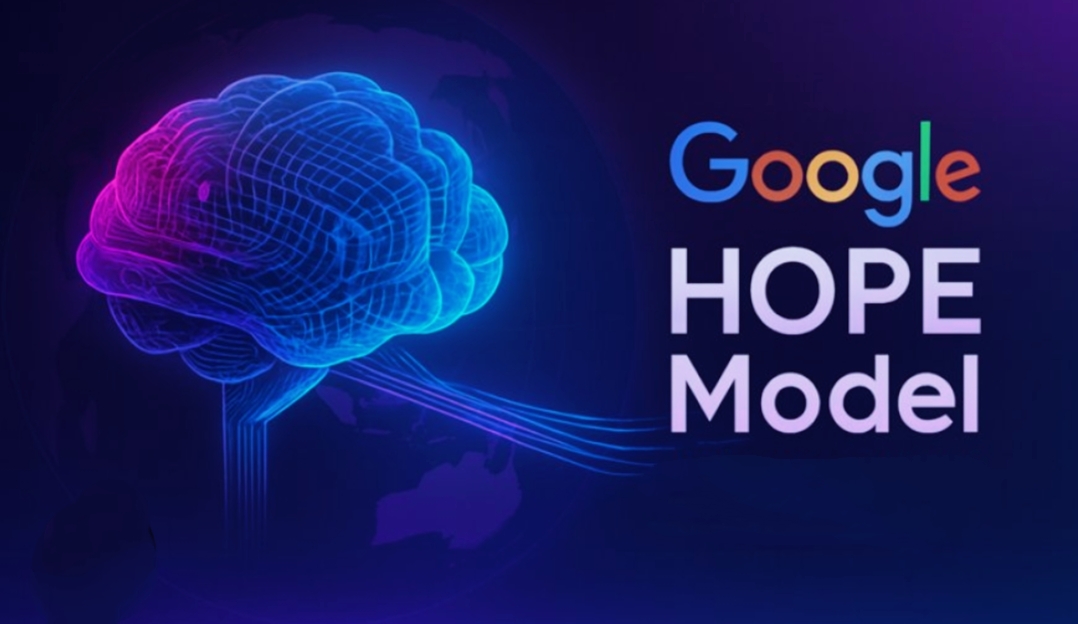
Google researchers announced that they have created a new machine learning model featuring a self-modifying architecture.
Named ‘HOPE’, this model reportedly excels in managing long-context memory compared to current top-tier AI models.
This model is intended to act as a proof-of-concept for an innovative approach called ‘nested learning’, developed by Google researchers.
According to Google, the new “nested learning” idea may help overcome the shortcomings of the large language models (LLMs) of today, especially with regard to continuous learning, which is a crucial step in the development of artificial general intelligence (AGI) or intelligence comparable to that of humans..
Google is making waves with its new AI model ‘HOPE’, which marks a significant advancement in continual learning.
For years, Google’s researchers have been focused on solving the issue of catastrophic forgetting in LLMs.
What exactly is continual learning? And why is it so challenging?
LLMs that drive AI chatbots can currently write sonnets and generate code in seconds. However, they still lack the basic ability to learn from their experiences.
Unlike the human brain, which learns and improves continuously, today’s LLMs can’t acquire new knowledge or skills without losing what they already know. This limitation is known as ‘catastrophic forgetting’ (CF).
Researchers have been attempting to address CF for years by either improving optimization methods or altering the model’s architecture. But according to Google’s researchers, the training rules- that is, the optimization algorithm and the model’s architecture are essentially the same thing.
What’s nested learning all about?
One of the more complicated machine learning models is nested learning, which is made up of “a set of coherent, interconnected optimization problems that are either nested within one another or operating simultaneously”.
Each of these internal problems has its own context flow – a unique set of information it’s trying to learn from.
By leveraging these ideas, developers can create learning components in LLMs that have greater computational depth, as stated by Google.
They added, “The resulting models, like the Hope architecture, show that a careful approach to combining these components can produce learning algorithms that are more expressive, capable, and effective”.
Tests on a range of widely used language modeling and common-sense reasoning tasks revealed that the proof-of-concept model, HOPE, demonstrated higher accuracy and lower perplexity when compared to contemporary LLMs.
- Makeup Mistakes Secretly Aging Your Skin

- Emergency Car Checklist: Items You Should Always Carry

- What Is Graveyard Dating? Gen Z’s New Relationship Habit

- Urine Formation: The Hidden Process Nobody Explains

- Walking 3-4 Miles Daily As You Age: Helping or Hurting Your Knees And Hips

- Group Voice And Video Calls Coming Soon To WhatsApp

- How To Stay Young: Habits That Actually Work

- Google AI Mode Unveils Search Agents That Track The Web In Real Time

- Why Tamil Nadu’s Kirti Chakra Hero Became a National Inspiration?

- Tejas Shirse Sets New 110m Hurdles National Record

- The Beauty Of Change: Eighteen Lessons From Life

- 3 Days To A Morning Person: Fact or Fantasy?

- New Zealand Legend Kane Williamson Announces Retirement

- FIFA World Cup 2026: How Fans Can Watch Matches For Free

- YouTube Relaunches Private Chats With Age Verification

- The Future Of Air Travel: Why The 100ml Liquid Limit May Soon Disappear

- Rising Temperatures, Rising Tempers? The Surprising Link Between Heat And Aggression

- India’s Lost Dragonfly Returns After 110 Years

- Snapchat Introduces Safer Story Sharing For Under-16 Users

- Google Launches Gemini 3.5 Live Translate

- The New Dating Trend Everyone’s Talking About: Puffer-Fishing

- Tea, Coffee, Juice: The Worst Empty Stomach Mistakes

- Instagram Introduces Profile Grid Customization

- Skywatchers Alert: Jupiter And Venus Set For A Rare Close Encounter Tonight

- Chrome Just Downloaded a 4GB AI Model? Here’s How to Delete It

- Why Does Real Love Feel Different Than We Expect?

- The 30-Minute Parenting Secret Every Child Needs

- Remote Robotics: Control Robotic Arms From Your Smartphone

- Mumbai’s Pod Taxis: Will BKC Benefit?

- Beyond The Missing Period: Understanding MRKH Syndrome

- Why Calling Every Stomach Problem ‘Gas’ Can Be Risky?

- Poke: Apple’s First AI Agent Debuts

- AC Drying Out Your Skin? Try This Simple Fix

- Want More Fireflies? Transform Your Garden Today

- Spotify Launches Podcast Clips For Instant Highlight Saving

- The Hidden Reason Summer Causes More Headaches

- Early Iron Deficiency Symptoms You Shouldn’t Ignore

- Meta Introduces Premium ‘Plus’ Tier For Instagram, Facebook And WhatsApp

- WhatsApp Launches Channel Status For 24-Hour Admin Updates

- 5 Powerful Signs You’re With The Right Person

- Social Media: The New Smoking For Children?

- Dewy, Glossy, Sweaty: The Viral Makeup Trend Everyone’s Trying

- Luna Launches Smart AI Band For Real-Time Daily Planning

- Meta Launches New ‘Forum’ App

- Why Is Your C-Section Scar Vertical?

- Red vs Orange Heat Alerts: Which One Puts Your Body At Greater Risk?

- Does AC Sleep Weaken Your Immunity? – Myth or Fact?

- The Rise Of Nonnamaxxing

- How To Clean Mushrooms Without Turning Them Soggy?

- How Hot Nights Quietly Harm Your Sleep And Heart?

- Indian Content Creators Can Win a Free Nepal Trip — Here’s How To Apply


Leave a Reply